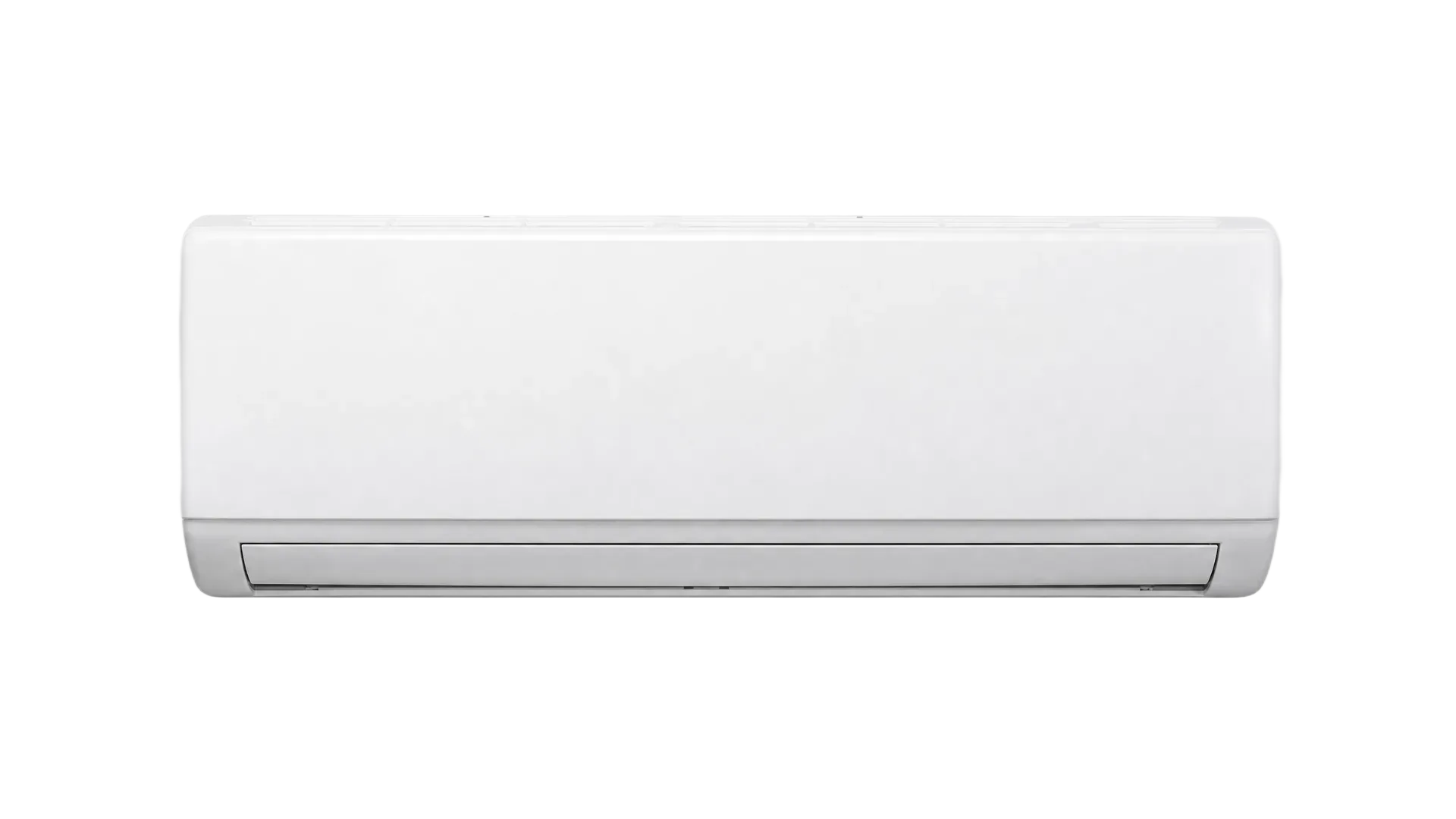

Skip maintenance, pay more to heat the same room
A dirty filter or a coil losing its charge makes the unit run longer to hit the same temperature, and with Massachusetts power rates that shows up fast on the bill.
You've got a mini split and winter's coming. Most houses around here heat with gas, so you're probably wondering whether the mini split is actually meant to carry the house through a Massachusetts winter or whether it's more of a shoulder-season thing that should step aside once it gets cold and let the furnace take over.
A mini split is a heat pump, and modern ones are built to keep working in cold weather, not just shut off below freezing. Most units sold for New England are rated to keep producing heat down to 5 degrees or lower, which covers nearly every day of a Massachusetts winter. Where it matters is on the coldest nights, when a unit's output drops and a gas furnace or boiler picks up the difference more cheaply than electric backup would. If your home has gas heat already, running the mini split through the mild stretches of fall and spring and letting it share the load in winter keeps the system efficient without asking it to do more than it's built for.
The thermostat calls for heat and the outdoor unit starts first.
The compressor pulls in cold refrigerant and squeezes it hot.
Hot refrigerant moves inside to the indoor coil.
The indoor fan pushes air across that hot coil into the room.




A mini split pulls heat out of the outside air, and the colder that air gets, the less heat there is to pull. Most units keep working well below freezing, but output drops off as the temperature does. On a 20 degree night it still runs, but it's putting out less heat per hour than it was at 40 degrees. That's why a lot of Massachusetts homes pair the mini split with the gas system rather than asking it to do the job alone on the coldest nights.
The outdoor unit has to pull air across its coil to work at all, so it needs clearance from snow banks and icicles coming off the roof. Some models run a defrost cycle that melts frost off that coil every so often, and you'll see steam coming off the unit when it does. That's normal. If snow piles up against the unit or ice blocks the coil, it can't move enough air to heat the house, no matter how cold it is outside.


A dirty filter or a coil losing its charge makes the unit run longer to hit the same temperature, and with Massachusetts power rates that shows up fast on the bill.
A contractor can check the refrigerant charge, clean the coil, and confirm the outdoor unit is ready for sustained cold before you depend on it every day.

That mini split spends the winter working against what summer already told you. Average out June, July and August here and the dew point sits at 60°F, heavy enough that the air feels thick even on days that aren't that hot. That same outdoor unit pulling moisture out of sticky summer air in July is pulling heat out of cold air in January, and a coil that's been running hard all summer carries that wear into winter without a break between seasons. A dirty coil or a low charge shows up as a room that won't quite reach temperature or a unit that runs longer than it used to. If you want someone to look at it before the cold settles in, send the form and let a contractor sort out the timing. Source: NOAA climate normals for Massachusetts.
NASA POWER T2MDEW county cells weighted by homes
That outdoor unit has been running since June, pulling moisture out of thick summer air, and now it's about to switch over and start pulling heat out of cold air instead. Same machine, no break between the two jobs. A coil that picked up dirt in August or a charge that's drifted low won't announce itself, it just makes the unit work harder on the nights you need it most, and with what power costs in Massachusetts that difference lands on the bill before it ever gets your attention. A filter clogged with a summer's worth of dust cuts the airflow the indoor coil needs to put heat into the room, so the unit runs longer to reach the same temperature. Getting that checked before the cold sets in means the mini split is pulling its full share on the January night it matters, not the night you find out it can't.
Plenty of mini splits carry a Massachusetts house through the cold without any backup, especially in a room that's well sealed. You set the thermostat and the outdoor unit does the rest, pulling heat out of outside air even when that air is well below freezing. The tradeoff shows up on the coldest nights, when the unit has to work harder for the same warmth, and on the power bill, since electricity here isn't cheap. If the unit's been maintained and the room doesn't demand much, running alone through January and February is a reasonable call.
Most homes around here already have a gas furnace or boiler, and plenty of owners let that carry the coldest stretch while the mini split handles the milder months on either side. Gas heat doesn't lose output as the temperature drops the way a mini split does, so on a single digit night it picks up the slack without strain. The mini split still earns its keep in October, November, March and April, when it can heat a room without firing up the whole system. Splitting the job this way asks less of both.


A mini split switches jobs between summer and winter using a part called the reversing valve, which redirects the refrigerant so the same outdoor unit that cooled your house in July can pull heat out of cold air in January. It only moves once a season, but if it sticks, the unit can get stuck in the wrong mode or struggle to switch over cleanly.
In winter, the outdoor coil picks up frost as it pulls heat from cold air, and the system handles this on its own. It runs a defrost cycle, briefly reversing to melt the ice, then switches back to heating. That's normal and happens without you noticing. What isn't normal is ice that's still there after the cycle finishes. That usually means the outdoor fan isn't moving enough air across the coil, or the refrigerant charge has dropped low.
Inside, a thermistor on the indoor coil reads the temperature and tells the system how hard to run. If that sensor drifts off by even a few degrees, the unit overcompensates, running longer than the room actually needs.
Short cycling, where the unit shuts off and kicks back on within a few minutes, points to the same two suspects: a thermostat sensor giving a bad reading, or a refrigerant charge that's off. Either one makes the system hunt for a setpoint it can't settle on.
None of this is rare for a unit running flat out through a Massachusetts winter. It's what a tune-up before the cold sets in is meant to catch.
At 30.41 cents a kilowatt-hour, every extra hour your mini split runs to make up for a dirty filter or a low charge costs more here than almost anywhere else. A unit running clean and full on refrigerant is the cheapest way to get through a Massachusetts winter on electric heat.
EIA-861 2025 statewide residential average
A mini split can run all winter here, and most of them do it fine, right through the stretch of cold that makes you wonder. What decides whether yours keeps up is the same thing that decided your August electric bill: whether it's clean and full of refrigerant or working harder than it should to do the same job. That's the part maintenance checks. You don't have to figure out on your own whether a cold snap means a repair or just the system doing what it does at 15 degrees. Send the form and that question becomes someone else's to answer, someone who can look at your unit and tell you straight whether it needs anything before the next cold stretch. You keep heating the house. Finding the right person for it stops being one more thing on your list.
One request and finding someone for the tune-up is handled.