Ductless Massachusetts
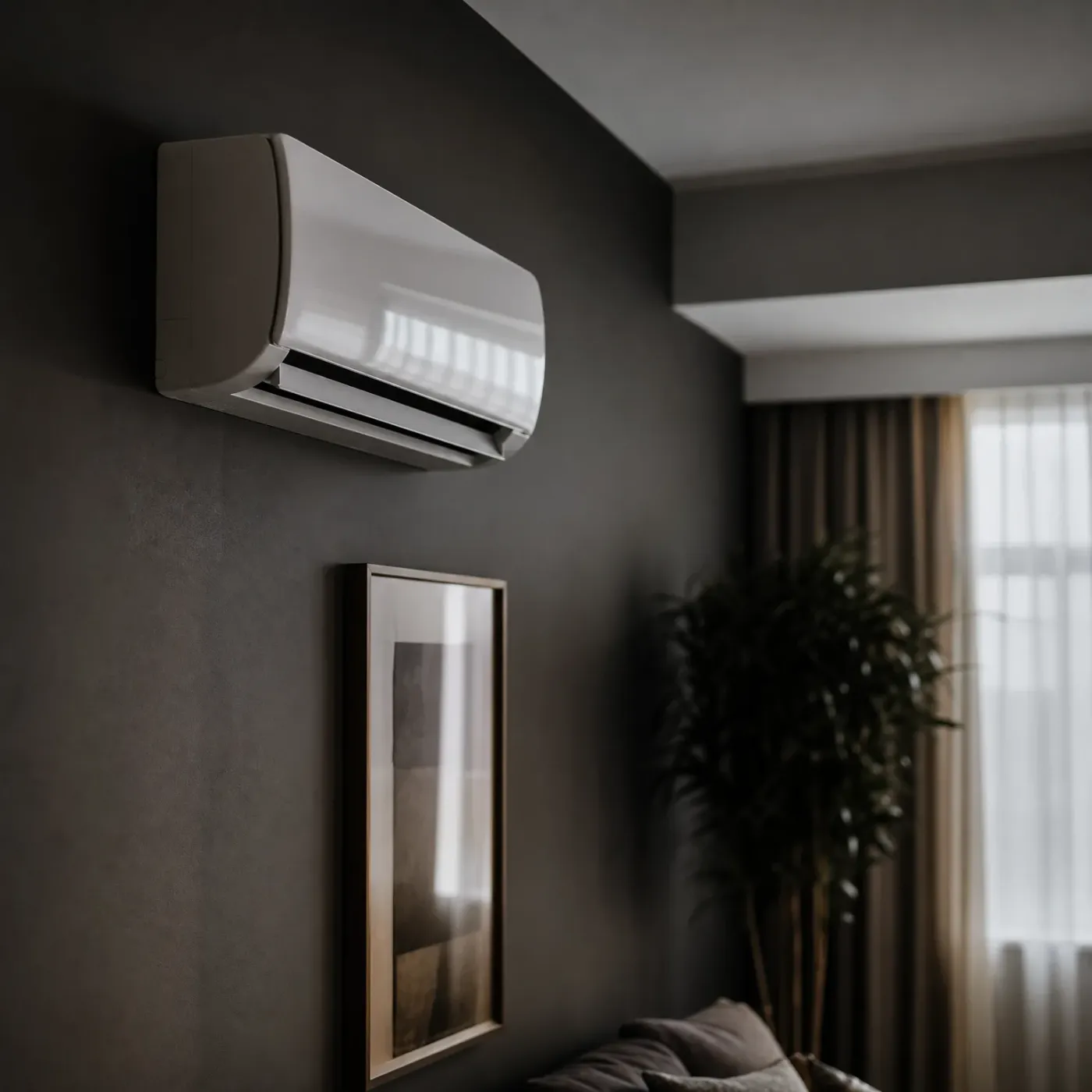
A white wall-mounted mini-split air conditioner on a dark gray interior wall above a framed picture, with a potted plant and curtained window to the right.

Hand off the search today

Why your mini split makes noise in a Massachusetts winter

Cold weather changes how a mini split sounds. The clicking when it starts, the whirring that picks up as it runs harder, the hum that wasn't there in the summer, a lot of it ties to how the unit works to pull heat from cold outdoor air. This page gets into which sounds are normal for a Massachusetts winter and which ones mean something needs a look. Send the details once and let a local pro who knows these systems take it from there.

Send it today

A mini split working through a Massachusetts winter has to pull heat out of air that can sit near freezing or below for weeks, and that takes more from the system than cooling a room in July ever did. The outdoor unit's compressor runs harder and longer to move that heat inside, and a harder-running compressor is a louder one. Below a certain outdoor temperature, frost builds on the outdoor coil, and the unit runs a defrost cycle to clear it. That's the clicking as it switches modes, a burst of louder fan or whirring while it runs, sometimes a hiss as refrigerant shifts. Most of this is the unit doing what cold weather asks of it. But a new sound, a sound that's louder than it used to be, or one paired with weaker heat, usually means something is working harder than it should: low refrigerant, a failing fan motor, ice that isn't clearing. That's worth getting looked at before it leaves you without heat.

A white wall-mounted mini-split indoor unit installed high on a gray interior wall, with a window at left and part of a light gray sofa with a dark cushion at lower right.

Normal winter operation

A faint whir as the fan speeds up, a click when the compressor kicks in. That's the unit doing its job, pulling heat from outdoor air that's barely above freezing. Nothing about the sound should startle you or get louder by the week.

A white wall-mounted mini-split air conditioner indoor unit with visible dust and staining along its lower vent, installed on a plain pale wall.

A unit that needs attention

Dirt and mold along the vents and casing mean the coil underneath is likely coated too. A unit working that hard against grime strains more, and the noise gets worse before anything breaks outright. Worth a look before January gets colder.

Winter Noise: Normal or Not

Noise you can watch

  • A rattle that only shows up at one fan speed and goes away at another usually means something loose, not a failing part.
  • Ice building up on the outdoor unit during a cold snap will make the defrost cycle run more often, and that cycle has its own click and whoosh as the valve switches.
  • A hum that stays steady and doesn't change pitch as the unit ramps up is often just the compressor working against a hard freeze, not damage.
  • If the noise shows up right after a nor'easter or a stretch of single-digit nights, check whether snow or ice is blocking the outdoor unit before assuming the worst.
  • Tightening a loose panel or clearing ice away from the outdoor coil is something you can often do yourself before it turns into a service call.

Noise that needs a look

  • A grinding or scraping sound from the outdoor unit points to a fan blade hitting ice, debris, or a housing that's come loose.
  • A noise that gets louder every time the compressor kicks on, rather than staying level, usually means a part inside is wearing out.
  • Banging or a metallic clatter from the indoor head is not normal at any outdoor temperature and shouldn't be left to run through the winter.
  • If the unit short cycles, turning on and off more than it used to, along with new noise, that's often tied to a refrigerant or electrical issue a homeowner can't fix with a tightened screw.
  • A licensed local contractor who works on mini splits all winter in Massachusetts will know which of these sounds is the defrost cycle and which is a part about to fail.
A white wall-mounted mini-split air conditioner near the ceiling of a beige interior corner, with a green houseplant and a curtained window at the lower left.

Why defrost cycles get noisy

Below freezing, frost forms on the outdoor coil and the system has to stop and melt it off or it can't pull heat from the air anymore. During defrost the reversing valve switches with a clunk, and what sounds like the unit struggling is often just this happening more often because a Massachusetts cold snap keeps the coil icing up faster than a mild day would.

A white wall-mounted mini-split air conditioner indoor unit on a plain light gray wall, positioned to the right of frame.

What the compressor is doing differently

In July the compressor moves heat out of a room that's maybe 10 degrees warmer than the air outside. In January it's doing the opposite job against a much bigger gap, sometimes 30 or 40 degrees between the air outside and the temperature it's trying to hit inside. That wider gap means the compressor spends more time at higher speed, and a variable-speed compressor running near its top end is simply louder than one idling along.

Why does my mini split click right before it switches to defrost?

You hear a sharp click from the outdoor unit, then the sound changes, right around the time frost has been building on that cold Massachusetts air. You're not imagining a pattern. You want to know if that click means a part is wearing out or if it's just the system doing something it's supposed to do before it clears the ice off the coil.

That click is the reversing valve switching the refrigerant flow

The reversing valve is what lets a mini split heat and cool with the same refrigerant loop. To start a defrost cycle, it has to switch direction, sending hot refrigerant out to the outdoor coil instead of indoors, so the frost melts off. That switch makes a mechanical clunk or click, and you'll hear the outdoor fan slow down or stop around the same time. In a Massachusetts winter, with the outdoor coil sitting near or below freezing for days at a stretch, that cycle runs often, so the click becomes familiar. One click, one cycle, then the system switches back. A click that repeats rapidly or comes with grinding is different and worth having looked at.

A smiling man in a navy long-sleeve shirt sits at a wooden table in a kitchen and dining area, with a ceramic mug, a potted plant, and a sliding glass door behind him.
A smiling bearded man in a green henley shirt stands at a kitchen island with a gray mug, looking off to the side, with a dining area and shelves blurred behind him.
A smiling bearded man in a navy sweater sits at a white kitchen island with a ceramic mug, with open shelves, potted plants and a range hood behind him.
A smiling man in a dark olive long-sleeve shirt sits in a kitchen beside a counter with a dark mug, with a dining table, sideboard and hallway visible in the blurred background.

Hand off the mini split problem

A new rattle or a grinding sound that shows up partway through a hard New England winter is usually a part giving out, not the cold air doing its normal work. A fan blade knocking against ice, a compressor mount that's worked loose, a reversing valve that's stuck half open and buzzing instead of clunking through its cycle. None of those get better on their own, and running a mini split through January and February with a part like that failing tends to finish the job faster, not slower. Someone who services these units all winter in Massachusetts has heard the difference between a system defrosting normally and one that's about to leave you without heat on a night it's fifteen degrees out. Sending the request means that judgment call isn't yours to make alone anymore, and it goes to one local contractor who knows this equipment, not a pile of calls to sort through. That's less to carry on a cold night.

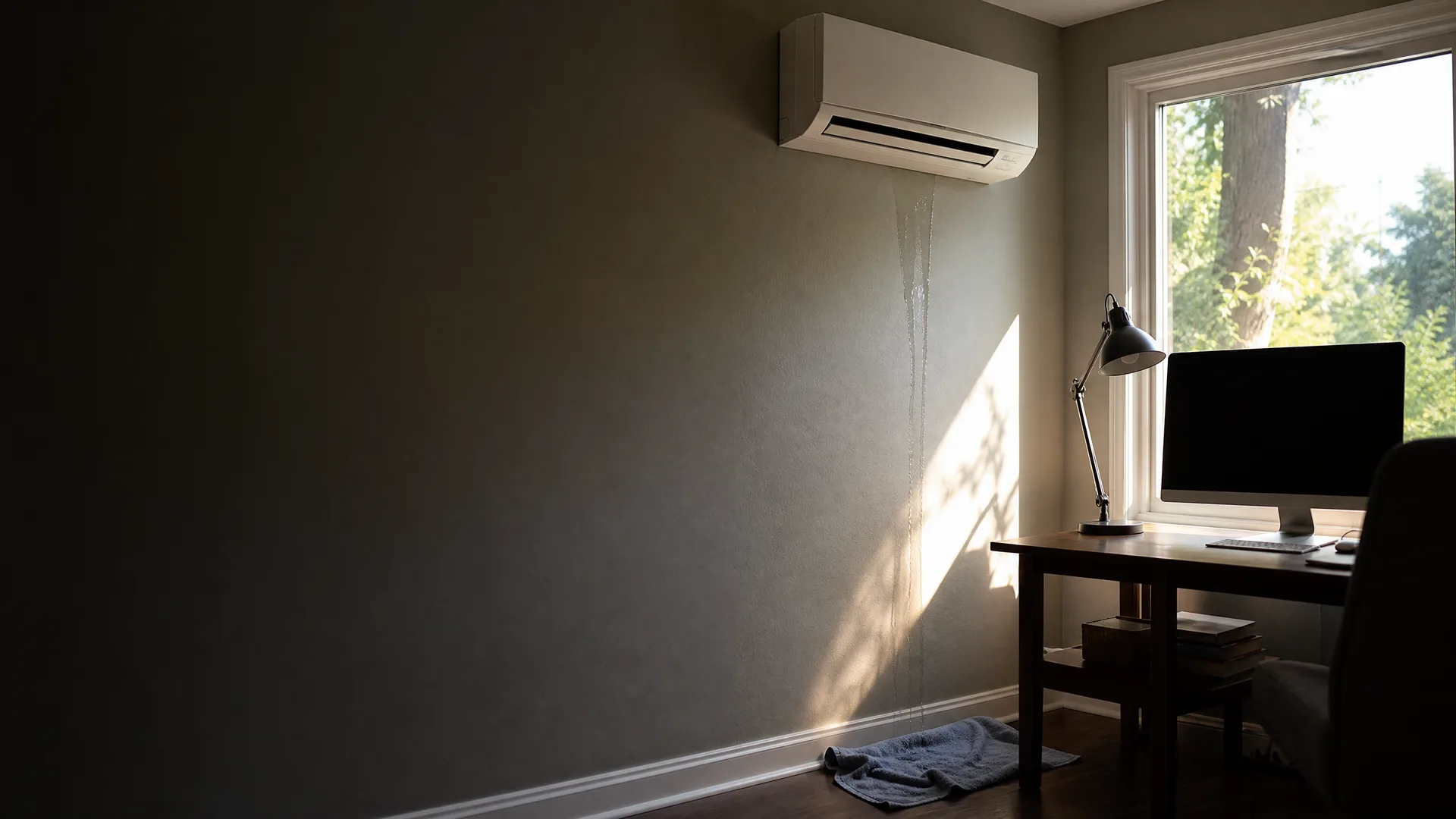
A wall-mounted mini-split air conditioner leaking water down a dim gray wall onto a towel on the floor, beside a window with a desk, lamp and monitor.

You're on a call in the home office, half listening to the mini split tick through another defrost cycle, when you notice the wall under the indoor unit has gone dark. A wet streak runs down from the housing to the baseboard, and by the time the call ends there's a damp patch spreading on the carpet. You grab a towel from the hall bathroom and press it against the wall, then step back and look at the unit itself, like it might explain itself. Outside, the afternoon is ordinary, nothing about the weather to account for it. The streak is already past where the towel can catch it all.

What are you hearing from your mini split right now

Walk past the indoor head and listen. A steady whir that rises and falls with the fan speed is normal. A clunk every so often as the system switches into defrost is normal too. What's worth stopping for is different: a rattle that wasn't there last winter, a grinding sound from the outdoor unit, a hum that keeps climbing instead of settling once the compressor is up to speed. Water stains spreading under the indoor head, or ice building up on the outdoor unit that doesn't melt off between cycles, point to something failing rather than the system just working through cold air. Left alone, a problem like that tends to get worse through the rest of the winter, not better, and can mean a repair instead of a quick fix.

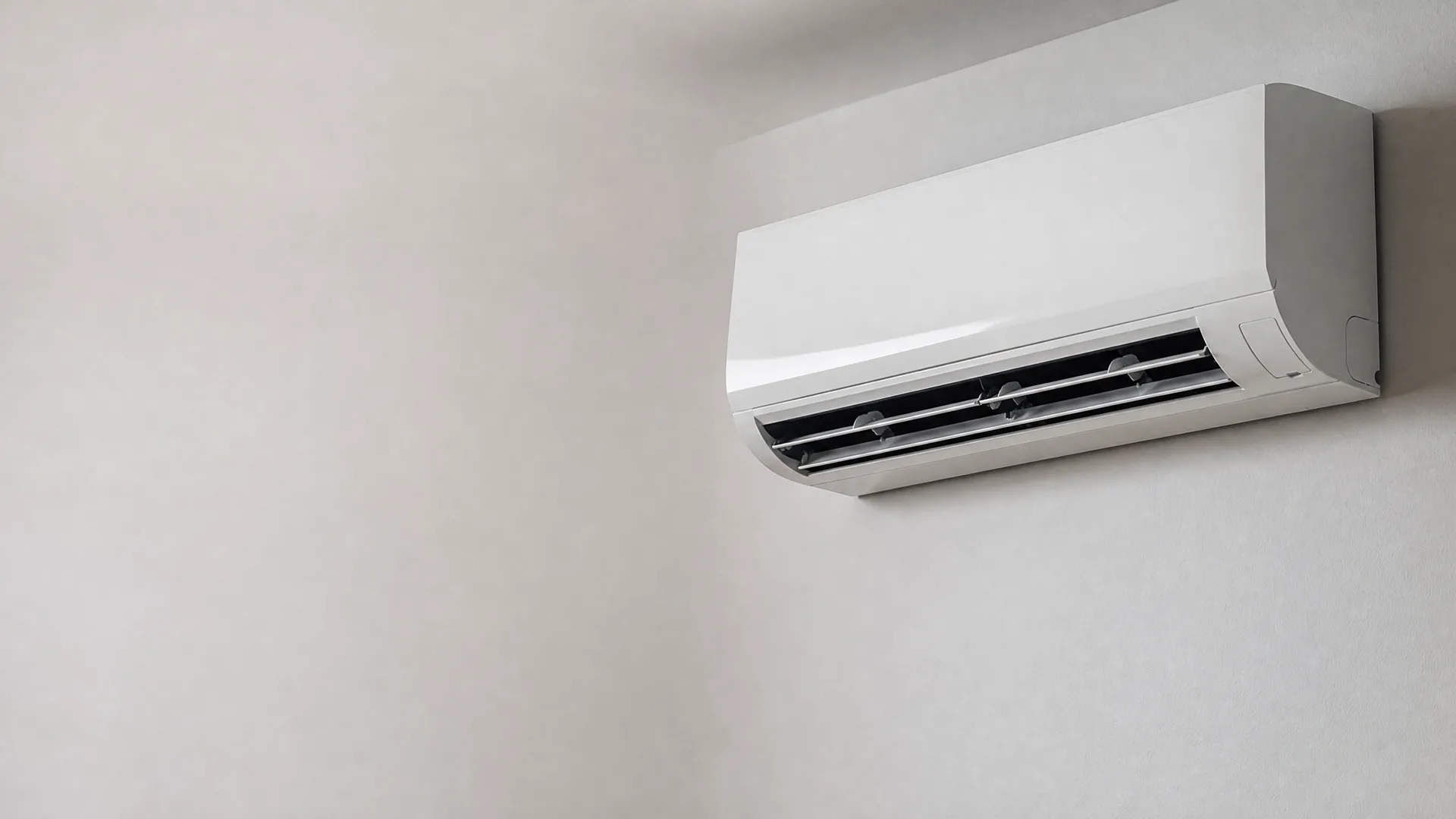
A white wall-mounted mini-split air conditioner installed high on a light gray interior wall below a white crown molding and ceiling with a recessed light.
A clean fan and an even hum mean the unit is keeping pace with the cold outside, nothing more.
A dusty, discolored white wall-mounted mini-split air conditioner unit installed on a plain beige interior wall below a molding strip.
Dust caked on the casing and vents left open like this are where a mini split starts falling behind in January.
A two-story cream-colored house with horizontal siding and a gray hipped roof, flanked by large green trees and shrubs, with a concrete walkway crossing a lawn to a wet street in the foreground.

A Massachusetts summer runs a dew point around 60°F, figured from where people actually live in the state. That's muggy enough that your mini split spends those months pulling moisture out of the air along with heat, which keeps the indoor coil wet and the fan working against that dampness. Come winter, that same coil runs dry, and a system doing different work makes different sounds. The whir that was steady and even in July can turn sharper and more mechanical once the cold sets in, not because anything's wrong, but because the unit's doing a different job than it did all summer.

NASA POWER T2MDEW county cells weighted by homes

A dusty, discolored white wall-mounted mini-split air conditioner unit installed high on a plain interior wall below a white ceiling molding.
Before you get your mini split repair
A white wall-mounted mini-split air conditioner on a beige interior wall, with a cream curtain and window at left, a potted plant on a ledge at right, and a wood floor below.
After you get your mini split repair
A white wall-mounted mini-split air conditioner near the ceiling of a room with light gray walls, white crown molding, and a beige curtain at the left edge.

Clean and keeping up

A clean fan, a clear vent, no staining on the wall. Air moves through without a fight, so the unit doesn't have to run longer or louder to keep the room at temperature. This is what a mini split pulling its weight in a Massachusetts winter looks like.

A dusty beige wall-mounted mini-split air conditioner indoor unit installed high on a plain light-colored wall below the ceiling.

Grime and strain

Dust caked across the casing blocks airflow, and the unit works harder to push out the same heat. That dark staining on the wall above it is often condensation finding a way out where it shouldn't. Left alone, both get worse, not better, as the cold drags on.

Power costs 30.41 cents per kilowatt-hour statewide

A mini split losing its edge, running longer defrost cycles or straining a worn part doesn't just get noisier, it costs more to run every one of those hours. At 30.41 cents a kilowatt-hour, a unit that's working harder than it should shows up fast on your bill.

EIA-861 2025 statewide residential average

What the noise is telling you

  • A whir that rises with fan speed and a clunk when defrost kicks in are both the unit working normally in cold outdoor air.
  • A rattle at one fan speed, grinding, or a new noise mid-winter usually points to a loose part or one that's failing, not the cold.
  • Frost and ice on the outdoor unit make defrost cycles run more often, and that's when strain on a worn part tends to show up as sound.
  • A wet streak below the indoor head means water is going somewhere it shouldn't, and that's worth a call on its own.
  • A clean fan, clear vents, and no staining on the wall are signs the unit is keeping pace with a Massachusetts winter without extra strain.
  • Noise that changes pattern or gets louder over a cold snap is the system telling you something before the part fails outright.

A mini split in a Massachusetts winter makes more noise than it did in July, and most of that is just the unit doing harder work in colder air. The whir that climbs with fan speed, the clunk when defrost starts, the hum that's new since fall. None of that means anything is wrong. What's worth stopping for is a change in that pattern. A rattle that only happens at one fan speed, a grinding sound, a noise that showed up partway through a cold snap and stayed. Ice building up on the outdoor unit pushes defrost cycles to run more often, and a part that was already worn tends to make itself heard right there, in the extra strain of those cycles running back to back. Water is a separate question from sound. A wet streak under the indoor head isn't the unit being loud about the cold, it's water going somewhere it shouldn't, and that's its own problem whether or not anything sounds off. The unit that's handling this winter well looks as plain as it sounds: a clean fan, clear vents, no staining on the wall, noise that stays steady instead of climbing. If what you're hearing has changed, gotten louder, or started showing up only during a hard stretch of cold, that's the system flagging something ahead of time. Catching it there, before a part fails outright, is the whole advantage of listening in the first place.

A man in a blue T-shirt sits on a light gray sofa, laughing while looking at an open laptop in the foreground, with a framed picture, lamp and potted plant behind him.
A bearded man in a blue and brown plaid flannel shirt stands indoors looking out a window at snow-covered trees, with a ceramic mug on the windowsill.

Mini Split Repair

Send one request and you're done looking

Your request stays with one local pro.

A black-framed smartphone standing upright against a plain light gray background, its screen filled with solid green.
Step 1 of 3: Equipment