
Running clean
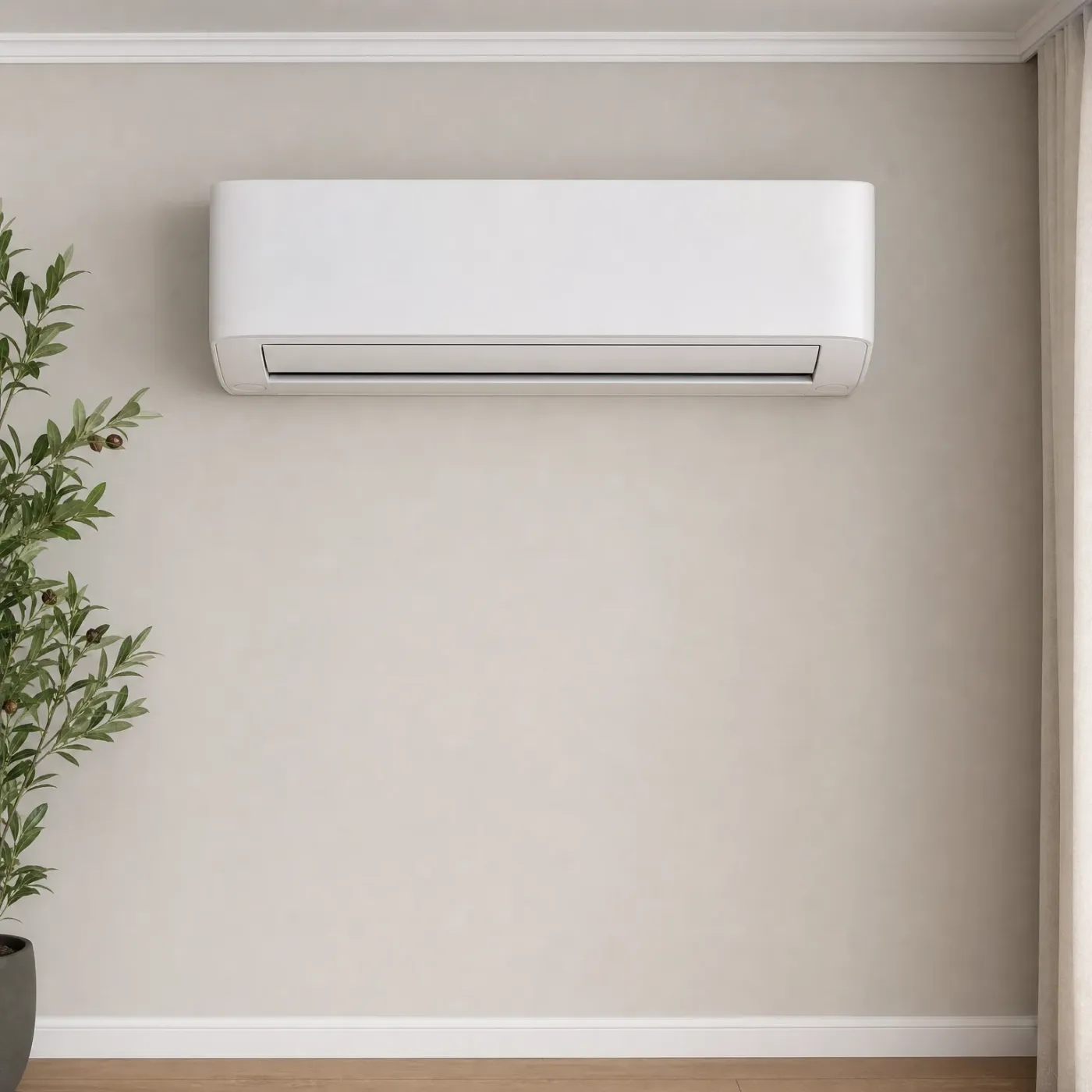
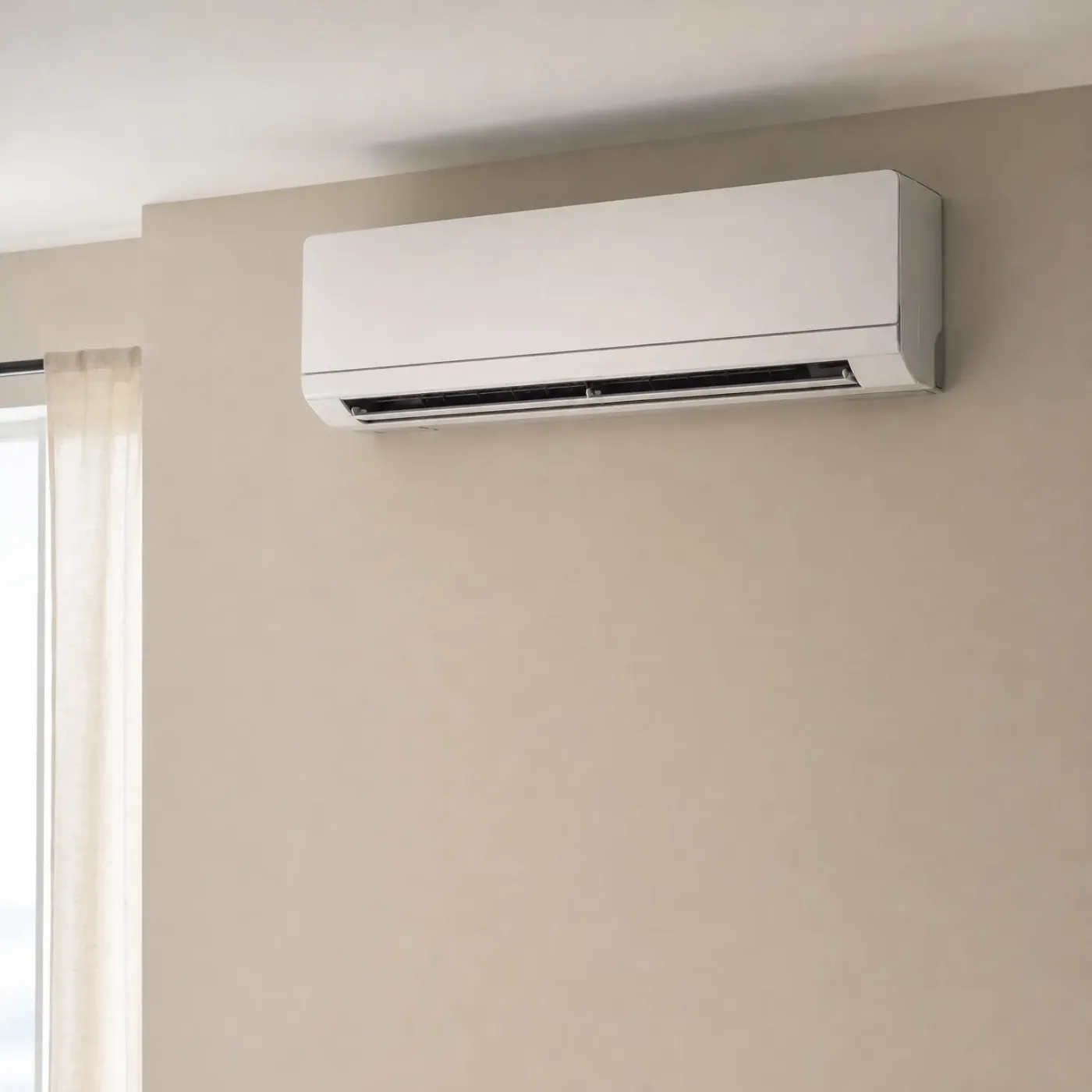
No smell when the heat kicks on. Air comes out warm and even, and the wall unit stays quiet. This is what a mini split looks like when the coil and filter inside are clear and the element isn't coated in dust.
 Get matched
Tell a local repair pro what your mini split is doing.
You turn on the heat and something smells off. Maybe it's musty, maybe it's sharp, maybe it only shows up for the first minute after the unit kicks on. Either way, you want to know if it's safe to keep running and what's causing it.
A mini split that smells wrong when heating usually points to something specific inside the unit. It could be the coil, the filter, or something living in the drain line. It is not something you can see by looking at the outside of the indoor head, and it is not something a general search answer can diagnose for your unit from here.
Most homes in Massachusetts heat with gas, so a mini split handling part of the heat load is often doing different work than the rest of the house, and that changes what tends to build up inside it over a New England winter. What's actually causing the smell in your unit takes someone looking at it.
That's the part that takes real time if you're on your own. Finding a contractor who works on mini splits, calling a few, describing the smell over the phone, getting quotes back and comparing them against each other, all before anyone has looked at your unit. Massachusetts winters don't wait for that process to finish, and electricity here is expensive enough that you don't want a mini split running inefficiently any longer than it has to.
This page skips that part. Tell it what's going on with your unit, and it matches you with a contractor who works on mini splits and knows the kind of heating issues that show up in homes here. That contractor reaches out to you directly. No calling around, no repeating the same description of the smell to five different people, no sorting through quotes on your own.
What you get next is someone who can actually look at your unit and tell you what's going on. The rest of this page gets into what usually causes it.
You turn the heat on and catch a smell right away, maybe musty, maybe sharp like burning dust, maybe gone after a minute. You want to know if it's something you can ignore or something that needs a look before you keep heating the house with it.
A burning or dusty smell in the first few minutes usually means dust sitting on the heating coil is burning off as it heats up, and it fades once the coil is warm. That's common after a mini split sits idle for months, which happens here since most homes run on gas heat the rest of the year and the mini split may only run for cooling. A musty or sour smell that doesn't fade is different. It points to mold or mildew growing inside the unit, often in the coil or the drain pan, and it can keep coming back every time the unit runs until someone cleans it out. Massachusetts summers get humid enough that moisture sits in the unit long after cooling season ends, which gives mold a place to start.
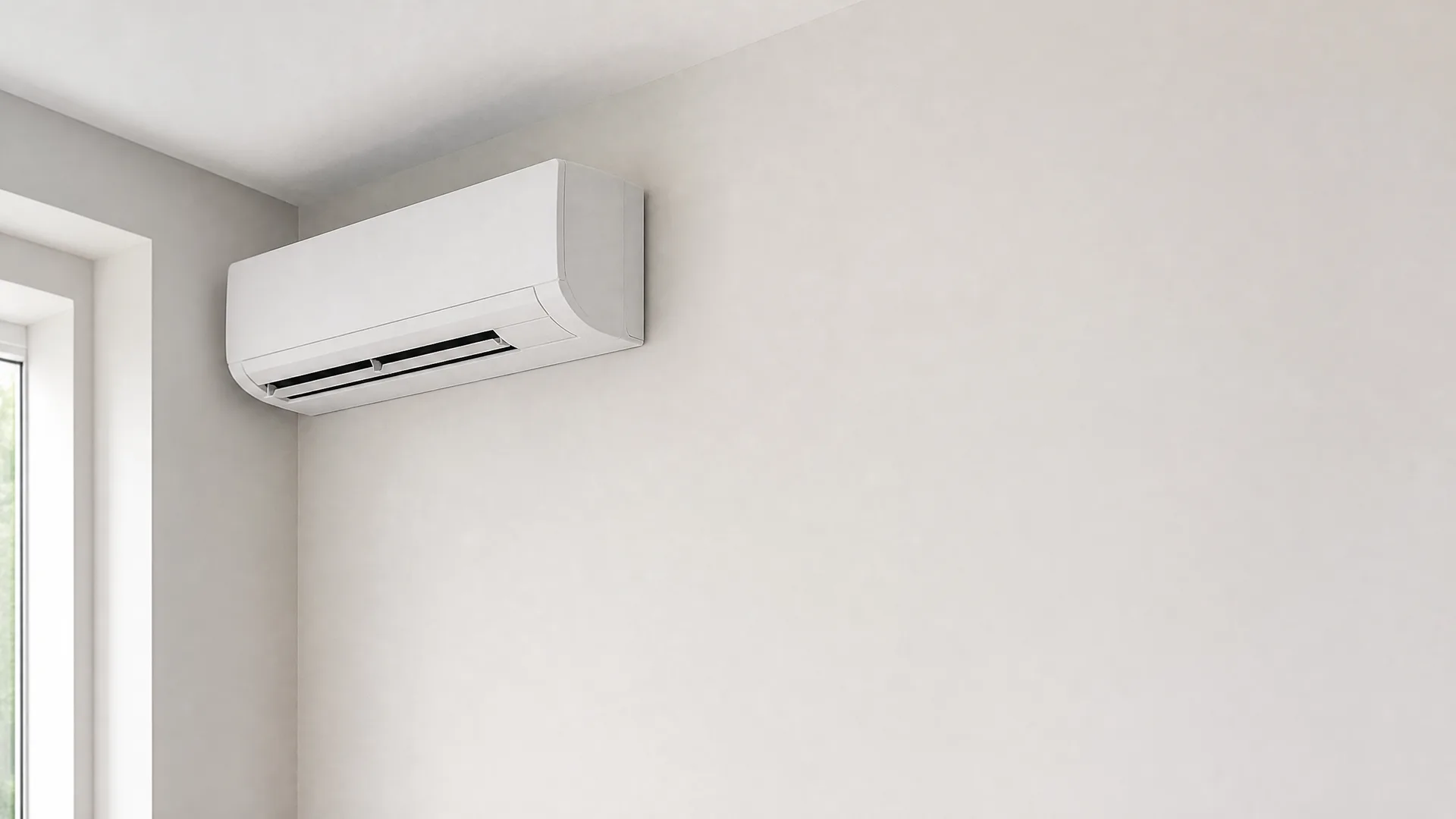
A mini split sitting idle all summer collects dust on its heating element and on the coil behind it. When you switch it to heat after months of only cooling, that dust scorches off in the first minute or two. That is the burning smell you get on the first cold morning you run it. It should fade and not come back once the unit has been running a few minutes.

Massachusetts summers stay sticky, and a mini split pulls that moisture out of the air and off the coil every time it cools. If the coil does not drain and dry fully between cycles, mold and mildew build up on it over the summer. Switching the unit to heat pushes air across that same coil, and the musty smell is what gets carried into the room with it.
You probably noticed it right when the unit kicked on, maybe a burning dust smell that faded after a minute, or a musty smell that lingers the whole time it runs. Some households also notice it on the first cold morning of the year, after the mini split sat idle all summer handling the humidity. If the smell fades quickly and only happens once, that's one thing. If it comes back every time the heat runs, or if it smells sharp, sour, or like something electrical, that points to a problem inside the unit, not just dust burning off. A mold smell that won't go away means something is growing in there, and running it blows that into the room your family is sitting in.
No smell when the heat kicks on. Air comes out warm and even, and the wall unit stays quiet. This is what a mini split looks like when the coil and filter inside are clear and the element isn't coated in dust.

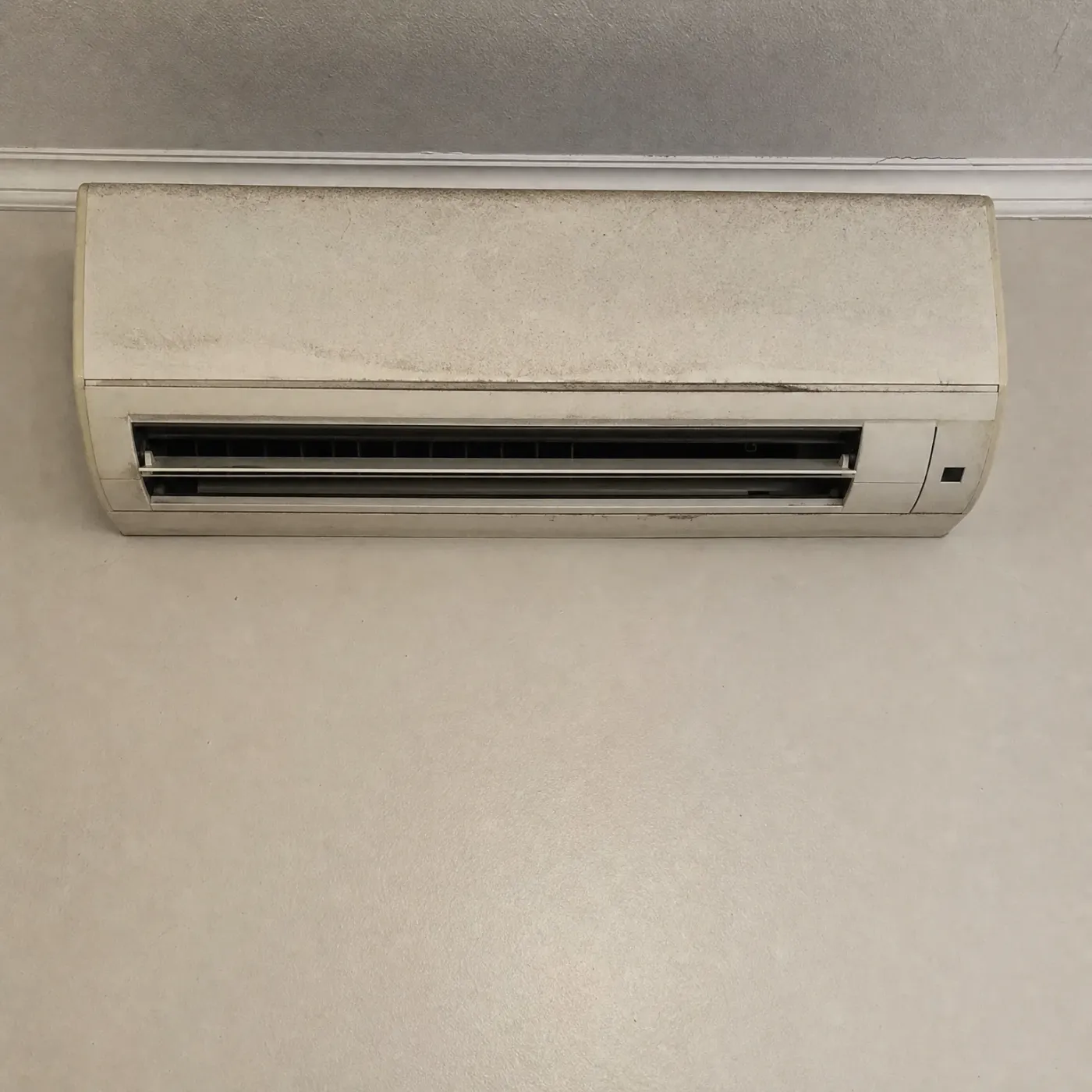
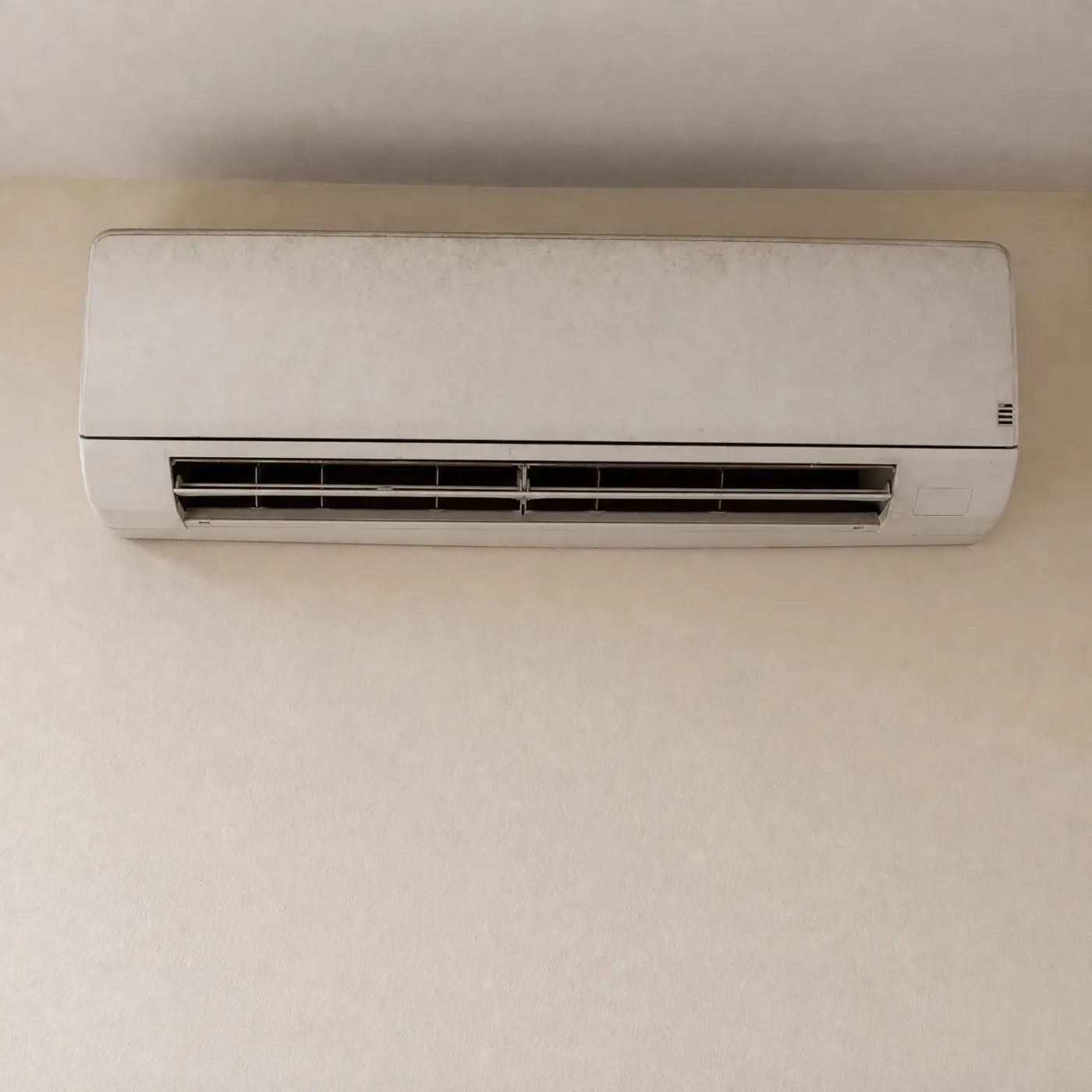
Dust sits thick on the front panel, the vents and the louvers. Inside, that same dust coats the coil and the heating element, and it's what burns or turns musty the moment the unit switches to heat. A unit this dirty needs a look.





Fill out one short form instead of calling around.
A local pro who knows mini splits gets your details and gets in touch.
It costs nothing to send, and you don't have to hire anyone.
A mini split has two main parts that matter here. The indoor blower wheel pulls air through the unit and across either a cold coil, when it's cooling, or a resistive heating strip, when it's heating. Those two jobs use the same fan but move air differently, at different speeds and angles, so heat mode reaches corners of the blower wheel that cooling never touches. Whatever dust sits there gets picked up the moment you switch over. Below the coil sits the condensate pan, which stays wet all summer while the unit cools your house and pulls moisture out of the air. That damp pan is a place mold and bacteria can grow without you ever smelling it, because cooling mode runs cold and doesn't carry the smell into the room. Switch to heat and warm air crosses that same pan, drying it out and carrying whatever grew there into your living room. A burning smell that clears in a minute is dust burning off the heating element itself, and that's expected the first time you run heat after a summer of cooling. A musty smell that sticks around the whole time the unit runs is coming from the blower wheel or the drain pan, not the element. A sharp, electrical smell is different from both of these and points to a loosened connection near the refrigerant line or wiring behind the wall unit, which is not something dust or mold explains.
You can keep running the unit with the smell there. It won't strand you without heat on a cold night, and for a lot of people that's reason enough to put it off. But a musty smell that doesn't fade usually means mold or bacteria sitting on the coil or in the drain pan, and that air is what's heating your room all winter. A sharp or burning smell that doesn't clear after the first minute or two is different. That one can mean dust packed tight against the element or a wiring issue, and it's worth having someone check before you run the unit again.
Finding someone to look at a mini split usually means searching for repair companies near you, calling a few, describing the smell each time, and waiting to hear back on availability and price. Some of those calls go nowhere. Some contractors don't work on mini splits at all, or don't have anyone free for weeks. Instead, you can tell us what's going on once and get matched with a contractor who services mini splits in your area. They'll reach out to you directly. You skip the round of calls and the repeated explaining, and you're talking to someone who already knows what you're dealing with before they show up.
At 30.41 cents per kilowatt-hour, running a mini split to mask a smell instead of fixing it costs more here than almost anywhere else. A clogged coil or dirty filter makes the unit work harder to push out the same heat, and in Massachusetts that extra draw shows up fast on your bill.
EIA-861 2025 statewide residential average
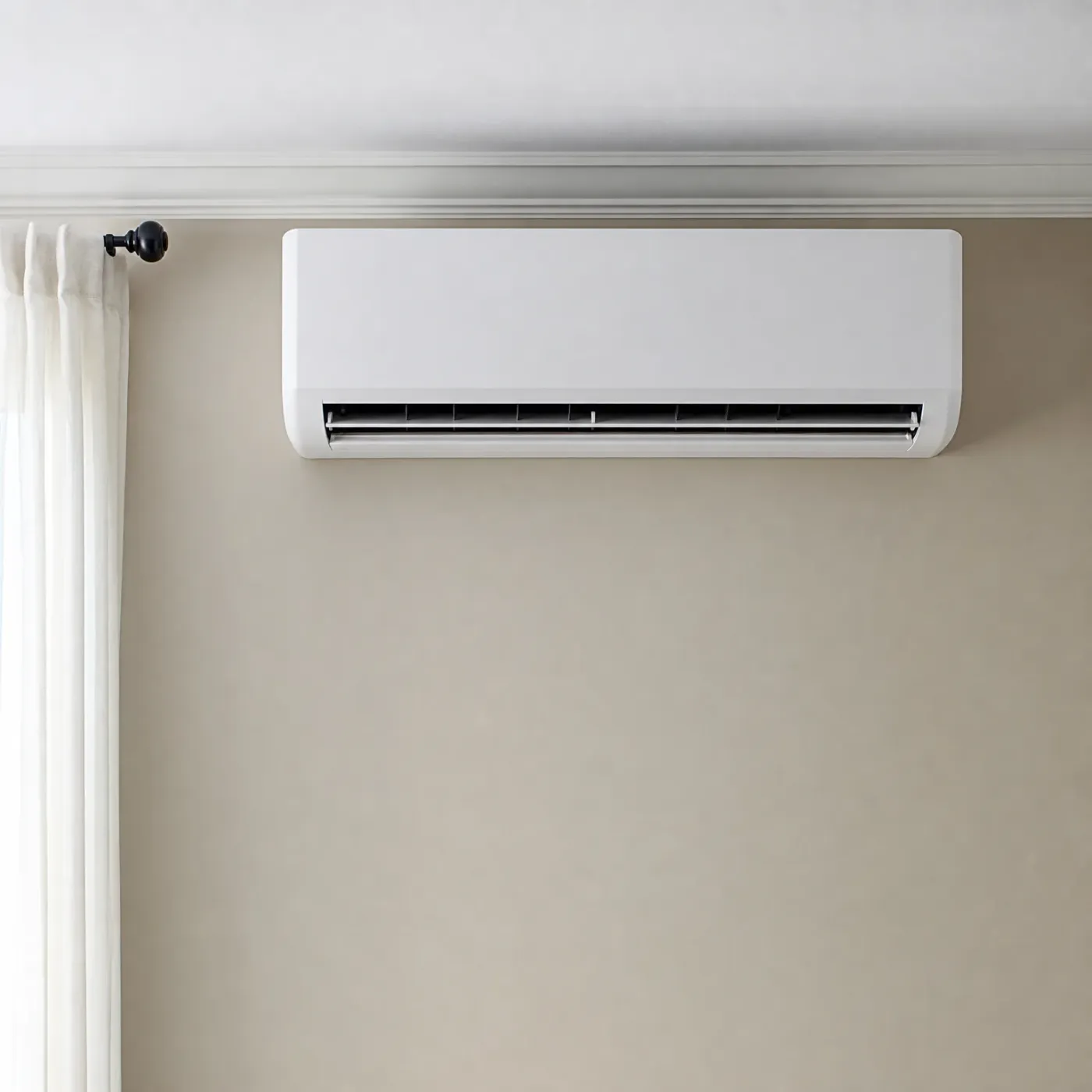
No film on the casing, no smell when the heat kicks on. Air moves across a clean coil and a clean element, so what comes out of the wall unit is just warm air, nothing riding along with it.
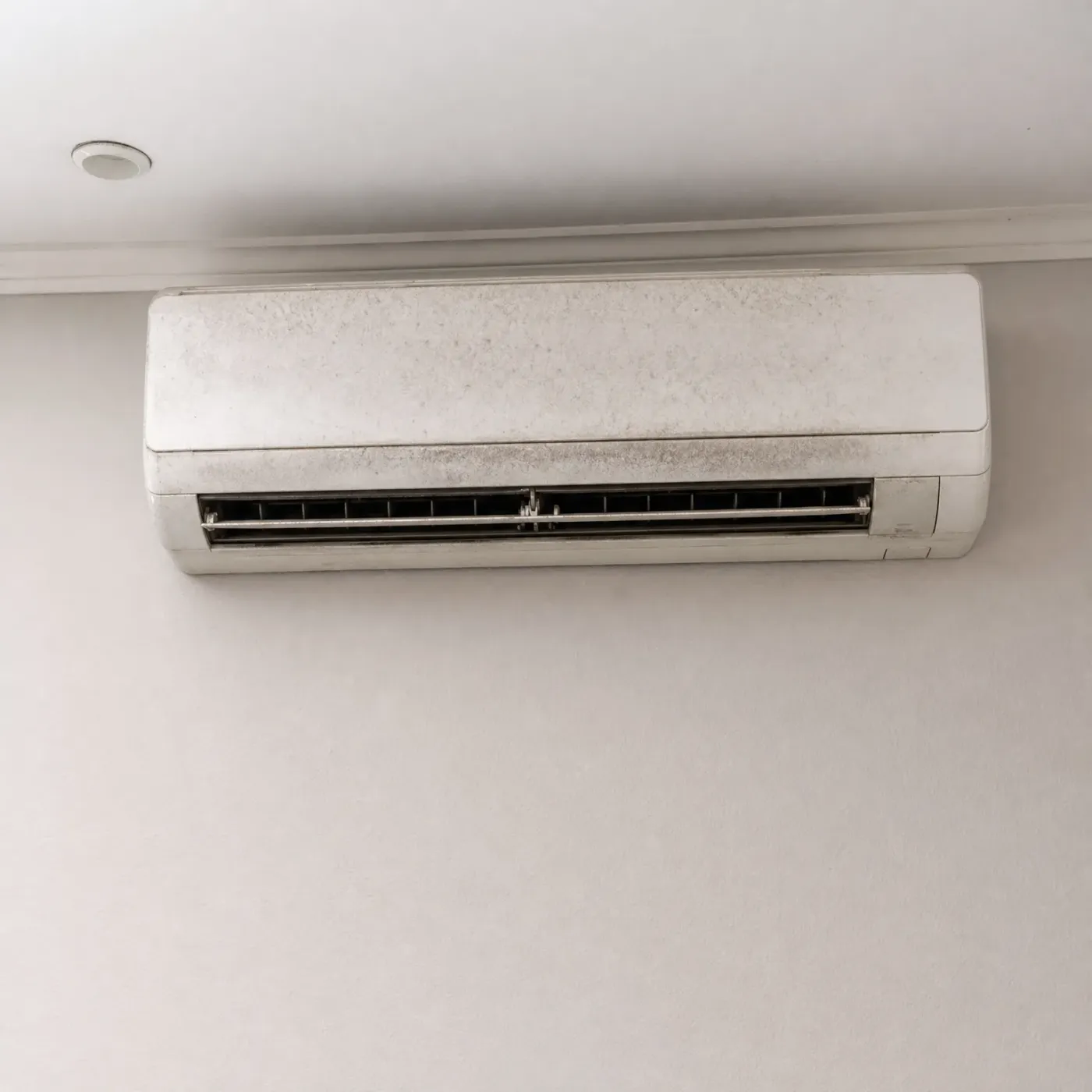
That dust and grime on the casing didn't start on the outside. It's a sign of what's coated the coil and blower wheel behind the panel, which is usually where a lingering smell is coming from.



Massachusetts summers run humid, with a dew point averaging 60°F across June, July and August, based on National Weather Service data for where people live in the state. That moisture doesn't just sit in the air outside. It settles into your mini split's indoor coil every time the unit cools, and whatever doesn't drain off dries there once summer ends. That's part of what you're smelling when you switch to heat. A coil that stayed damp for three months gives mold and bacteria a place to grow, and heat mode is what finally dries it out and pushes that smell into the room.
NASA POWER T2MDEW county cells weighted by homes
A burning dust smell that fades in a minute is the unit clearing off what settled on the element over the summer. A musty smell that doesn't fade is moisture and growth sitting in the coil or the drain pan, and heat mode just pushes that air into the room you're sitting in. Running it anyway won't leave you without heat, but it won't clear the smell either, and it costs more to keep running a dirty unit here than almost anywhere else. The part you shouldn't have to deal with is tracking down someone to look at it: searching for a contractor who works on mini splits, calling a few to see who answers, explaining the smell and when it shows up all over again on each call, then sitting with quotes trying to compare them. That part you can skip. Answer a few questions about what you're smelling and when, and a contractor who works on mini splits in Massachusetts gets in touch with you directly. You'll know by then whether this is a quick cleaning or something more, and you won't have spent your evenings finding out who to ask.
Matched to your mini split job